
How to Improve Yard Drainage and Prevent Standing Water in Louisa, VA
Standing water, soggy grass, and muddy areas can make it difficult to enjoy your yard. Beyond affecting the appearance of your landscape, persistent drainage problems may contribute to soil erosion, damage planting areas, and allow water to collect near your home's foundation.
For homeowners in Louisa, VA, effective yard drainage begins with understanding where the water comes from, how it moves across the property, and why it is not draining as expected. The right solution depends on the property's slope, soil conditions, existing landscaping, and the location of nearby structures.
G&G Excavating & Landscaping helps property owners address outdoor property challenges through excavation and landscaping services. Understanding common drainage problems and the available solutions can help you determine when professional assistance may be worthwhile.
1. Identify Where Water Collects in Your Yard
Before choosing a drainage solution, observe where water collects and how long it remains after rainfall.
Some yards naturally stay damp for a short period following heavy rain. However, recurring puddles or consistently saturated areas may indicate that water is not moving away efficiently.
Common warning signs include:
- Puddles that remain long after surrounding areas have dried.
- Muddy sections of lawn that are difficult to walk across.
- Grass that repeatedly dies or struggles in waterlogged areas.
- Soil washing away along slopes or around planting beds.
- Water collecting near patios, driveways, or walkways.
- Runoff flowing toward the house instead of away from it.
Pay attention to whether the problem occurs throughout the yard or in one particular location. Water collecting near a downspout may require a different solution from water accumulating in a low area with heavy clay soil.
Observing the property after several rain events can help reveal patterns and provide useful information when discussing drainage options with a professional.
2. Understand What Causes Poor Yard Drainage
Drainage problems can develop for several reasons, and identifying the underlying cause is essential before investing in a solution.
Improper Grading
If the ground slopes toward a building or contains depressions, rainwater may collect rather than flow toward an appropriate drainage area.
Grading adjustments can sometimes improve the direction of surface water, but changes must be carefully planned to avoid transferring the problem to another part of the property.
Compacted or Slow-Draining Soil
Some soils absorb and release water more slowly than others. Compaction can further limit infiltration, allowing water to remain near the surface.
Adding plants or making minor landscaping changes may help in certain situations, but severe or persistent drainage issues may require a more comprehensive approach.
Roof Runoff
Roof gutters and downspouts concentrate rainfall into specific locations. If downspouts discharge too close to the house or onto an area that cannot handle the runoff, water may collect near the foundation or spread across the lawn.
Blocked or Inadequate Drainage Systems
Existing drainage pipes, channels, or inlets can become obstructed by leaves, sediment, roots, and other debris. A drainage system may also be poorly suited to the volume of water it receives.
Understanding the source of the water helps determine whether the solution involves grading, redirecting runoff, improving drainage infrastructure, or addressing several issues together.
3. Consider Landscape Grading to Redirect Water
Landscape grading involves shaping the ground to guide water toward an appropriate drainage destination.
When a yard contains low spots or slopes toward a structure, carefully planned grading may help improve surface-water movement.
Depending on the property's layout, grading work may involve filling depressions, adjusting slopes, or reshaping selected areas of the landscape.
However, grading is not simply a matter of moving soil until the yard looks level. A properly planned surface needs to direct water away from buildings without creating new problems for neighboring properties or other areas of the yard.
The existing soil, nearby structures, retaining features, utilities, and intended drainage destination all need to be considered.
For homeowners in Louisa, VA, professional grading may be worth exploring when water consistently pools in the same area or when the landscape directs runoff toward the home.
4. Explore French Drains and Other Drainage Solutions
When surface grading alone cannot resolve a drainage problem, a subsurface drainage system may be appropriate.
The best option depends on the source of the water, the amount of runoff, and the conditions of the property.
French Drains
A French drain typically consists of a gravel-filled trench containing a perforated pipe designed to collect and convey groundwater or subsurface water toward a suitable outlet.
These systems may be useful for certain persistently wet areas, but they need to be designed with the correct depth, slope, materials, and discharge location.
A French drain is not automatically the right answer for every wet yard. If the main issue is surface runoff, a different drainage approach may be more effective.
Surface Drains
Surface drains collect water at the ground level through an inlet or grate and direct it into a drainage system.
They may be useful in selected low areas, near paved surfaces, or wherever surface water needs to be collected efficiently.
Downspout Extensions
When roof runoff is contributing to the problem, extending downspouts to discharge water at an appropriate location may help reduce concentrated moisture near the house.
The discharge area must be suitable, and runoff should not be redirected toward neighboring properties or areas where it could cause erosion.
Drainage Swales
A drainage swale is a shallow, shaped channel that guides surface water across a property. Depending on the design, it may be grass-lined or incorporated into the landscape.
Swales can help manage runoff while maintaining a natural appearance, provided they are designed for the site's slope and water flow.
A professional evaluation can help determine which option—or combination of options—best addresses your yard's drainage conditions.
5. Protect Your Home by Managing Water Near the Foundation
Water that repeatedly collects near a home's foundation deserves attention. Persistent moisture may contribute to basement or crawl-space concerns, soil movement, and other property maintenance problems.
Start by checking whether gutters are clear and downspouts discharge water away from the building. Look for low spots along the foundation and areas where soil has settled.
Also observe how the ground slopes immediately around the home. Water should generally move away from the foundation rather than toward it.
If water continues to accumulate despite basic maintenance, the property may need grading adjustments or a more developed drainage solution.
Avoid assuming that a French drain or any single product will resolve every foundation-related moisture issue. The source of the water and the construction of the building should be evaluated before selecting a remedy.
If you notice water entering your basement or crawl space, persistent dampness, or signs of foundation movement, consider consulting the appropriate qualified building or drainage professional.
6. Prevent Soil Erosion and Protect Your Landscaping
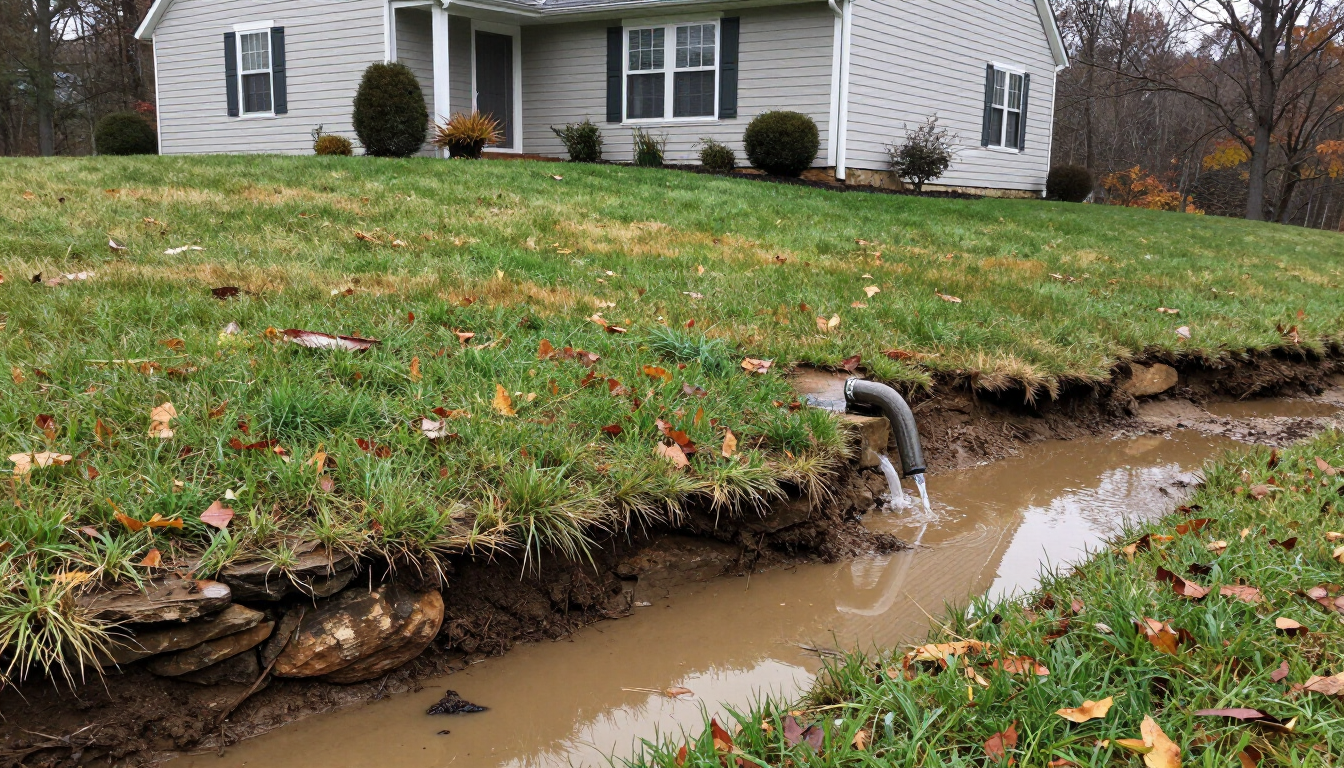
Poor drainage can affect more than the lawn. When runoff moves too quickly across bare or sloped soil, it may carry away topsoil, expose roots, and wash mulch or gravel out of planting beds.
Over time, erosion can change the shape of the landscape and create additional maintenance needs.
Several strategies may help reduce erosion when properly matched to the site:
- Establish suitable vegetation to help stabilize exposed soil.
- Use mulch in planting beds where appropriate.
- Direct concentrated runoff away from vulnerable slopes.
- Consider grading or drainage improvements where water repeatedly cuts channels into the ground.
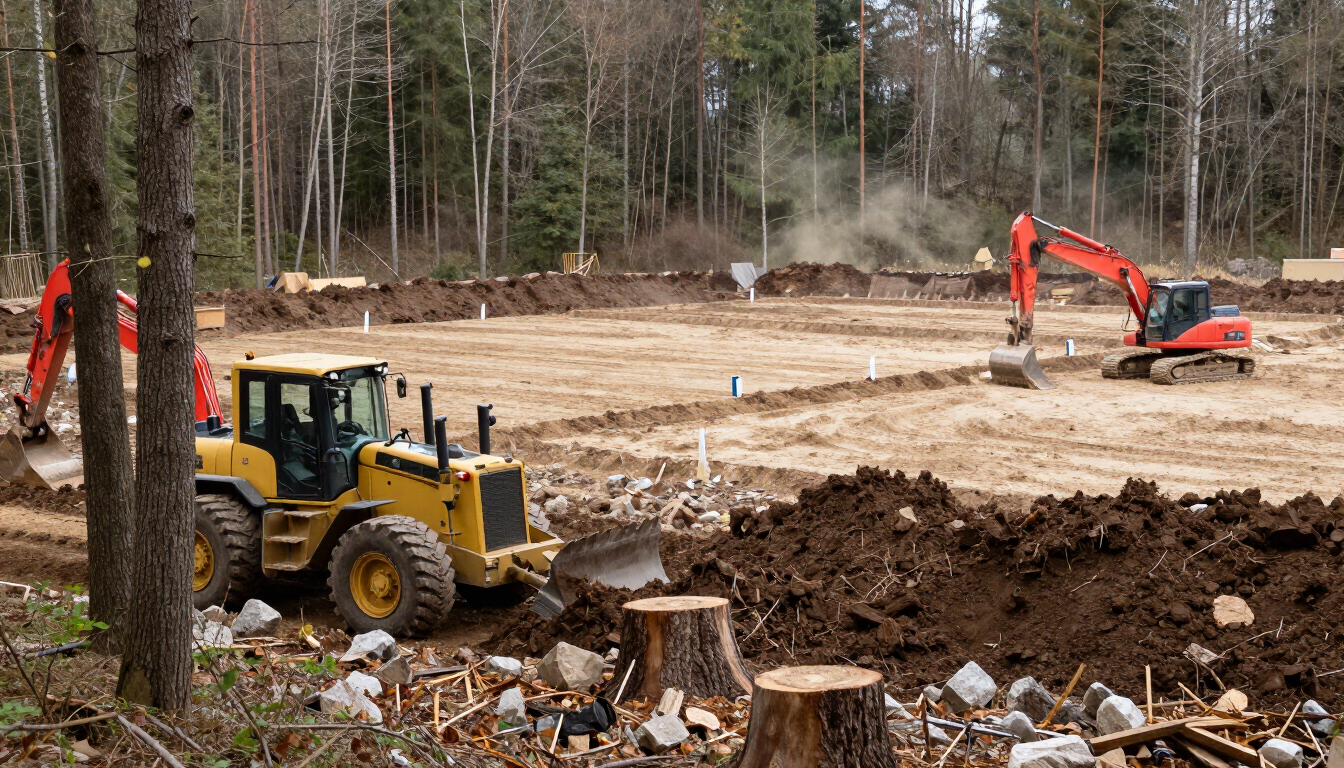
- Avoid leaving large areas of soil exposed during landscaping or excavation projects longer than necessary.
Steep slopes or areas carrying substantial runoff may require engineered or professionally designed solutions rather than simple surface treatments.
For properties in Louisa and surrounding communities, managing water flow as part of a broader landscaping plan can help protect the usability and appearance of outdoor spaces.
7. Know When to Call a Drainage Professional
Some minor drainage concerns can be addressed through routine maintenance, such as clearing gutters or removing debris from accessible surface drains. Other problems require a more thorough assessment.
Consider professional help when:
- Standing water repeatedly returns after rainfall.
- Water flows toward your house or another structure.
- Soil erosion is worsening.
- Your lawn remains saturated for extended periods.
- Existing drainage systems appear ineffective.
- You are planning excavation or major landscaping changes.
- You are unsure where collected water can be discharged safely and appropriately.
A professional can evaluate the property's elevations, soil conditions, runoff patterns, and existing drainage features before recommending a solution.
It is also important to consider underground utilities before digging. Contact the appropriate utility-locating service before excavation and follow local requirements for drainage work and runoff management.
Addressing the cause of the problem rather than treating only the visible puddles can help you make a more informed investment in your property.
Improve Your Property's Drainage With G&G Excavating & Landscaping
A well-drained yard is easier to maintain and more enjoyable to use. When water repeatedly collects in the same places, identifying the cause is the first step toward finding a practical solution.
From evaluating grading concerns to considering drainage improvements as part of a broader property project, the right approach depends on your landscape and the way water moves across it.
G&G Excavating & Landscaping serves property owners in Louisa, VA, and surrounding areas with excavation and landscaping services.
Dealing with standing water or recurring drainage problems?
Contact G&G Excavating & Landscaping to discuss your property and explore potential drainage solutions.